A dream car, not a copy
Most of the very first Hot Wheels in 1968 were customized versions of real cars: Camaros, Corvettes, hot rods. The Turbofire was something else. Mattel designer Ira Gilford drew it in January 1968 and called it his "Dream Car." It was one of the first cars Hot Wheels designed entirely in-house, with no real-life version behind it.
Gilford had just left Chrysler when Mattel hired him, and he became the second designer on the Hot Wheels team. Besides the Turbofire he drew some of the most famous cars in the line's history, including the Twin Mill and the Splittin' Image.
The engine under the hood
The fun part is the back end: the rear hood swings open to show a turbine engine. That's where the "Turbo" in the name comes from. The early sample cars had a hinge with no stop, so the hood could swing too far and snap off. Mattel added a stop peg and beefed up the hinge before the production run.
Built in America
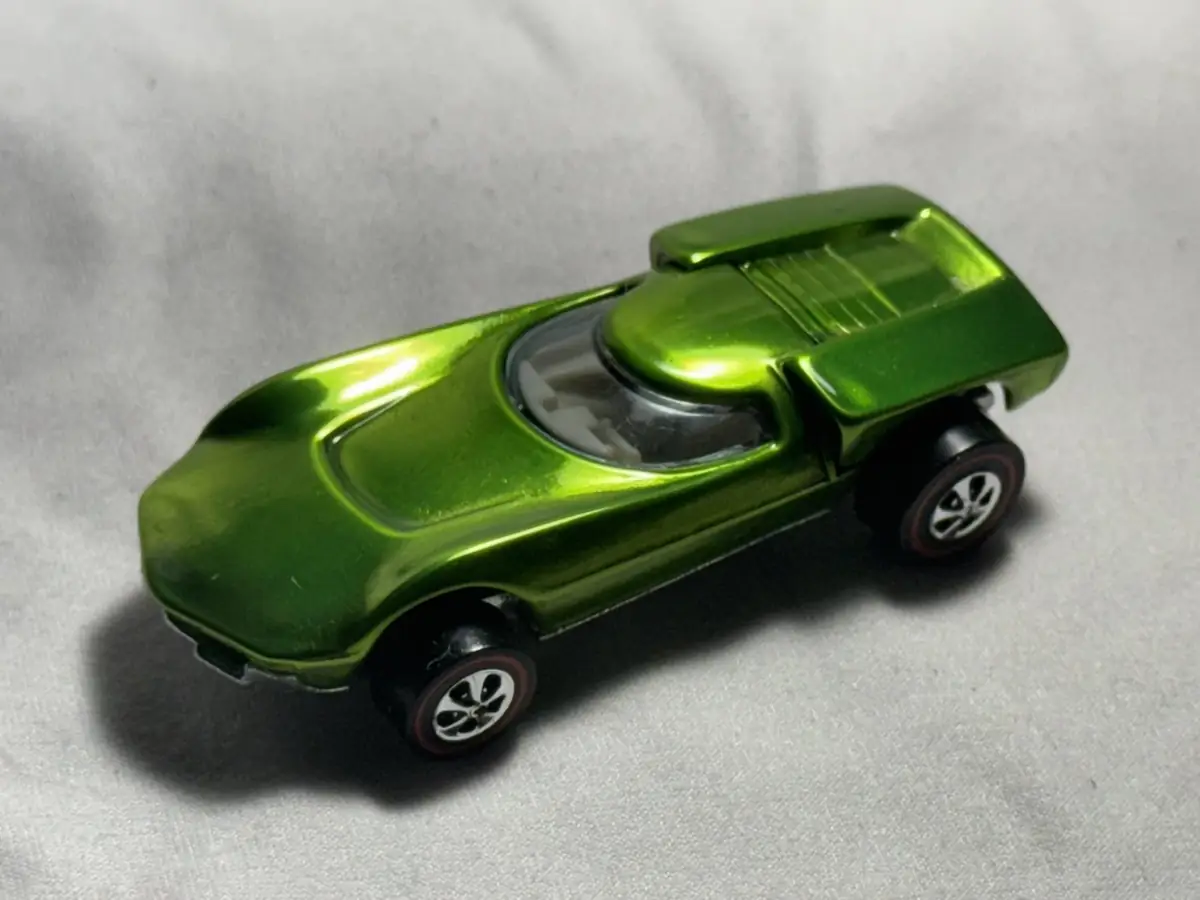
Every Turbofire was made in the USA. It came in a long list of Spectraflame colors, from aqua, blue, gold, green and lime to rarer ones like rose, purple, magenta and hot pink. Nearly all of them had a white interior under a clear canopy.
Hot Wheels changed the toy aisle
Mattel launched Hot Wheels on May 18, 1968. The idea came from Elliot Handler, Mattel's co-founder, after he watched his son play with Matchbox cars. Mattel hired Detroit car designer Harry Bentley Bradley, who drew eleven of the first sixteen cars.
The big difference was speed. Hot Wheels rolled on wide, hard-plastic tires that made less friction and tracked straighter than the narrow wheels on Matchbox cars, and they flew down the orange track. They sold for 98 cents when other little cars went for about 49 cents, and kids wanted them anyway. In 1968 Mattel fell more than a year behind on orders.
By 1969, the year the Turbofire arrived, Hot Wheels was the hottest small toy car brand in America.
Spectraflame and the red stripe
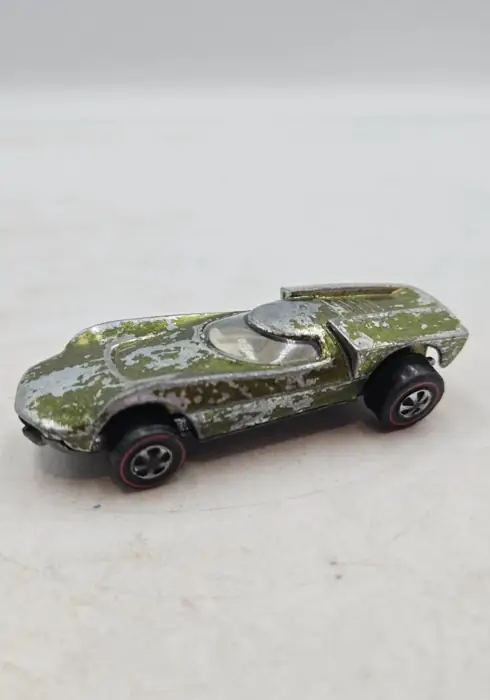
Cars from these years are called Redlines for the thin red stripe on each tire. Their paint, called Spectraflame, was a see-through tinted coat over polished metal, which gave it that candy-apple glow. It's also why so many of them look like Clay's "before" photo: decades of play rub the thin color off and the silver shows through. Mattel switched to plain enamel paint in 1973, and the redline tires were phased out by 1977.
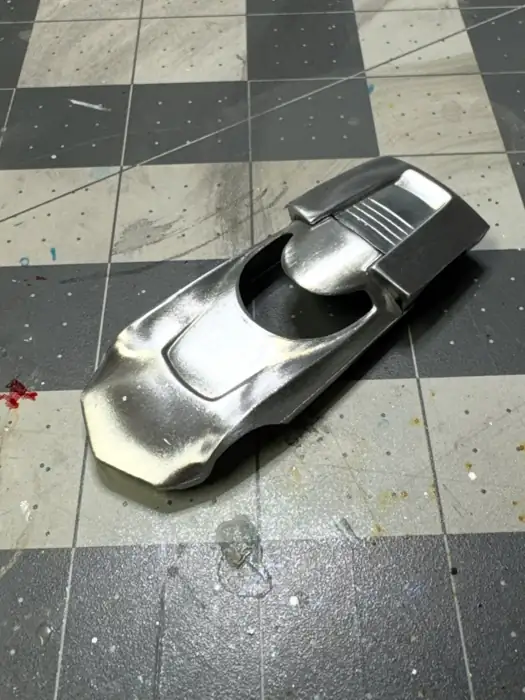
That's what makes a restoration like Clay's special. Getting that deep, glowing finish back on a car this small takes patience and a steady hand.